
Balloon Sinuplasty Explained: What to Expect Before, During, and After the Procedure
If you have spent months dealing with facial pressure, congested breathing, and sinus headaches that antibiotics and nasal sprays simply cannot touch, you are not alone. Chronic sinusitis affects roughly 30 million Americans, and for many, medication eventually stops delivering meaningful relief. At that point, the conversation naturally shifts toward a procedure, and the idea of surgery can feel daunting. That is where balloon sinuplasty Los Angeles patients are increasingly turning to a gentler, less disruptive option. At LA Sinus and Snoring in Beverly Hills, CA, we help patients understand exactly what this procedure involves so they can move forward with confidence rather than anxiety.
What Is Balloon Sinuplasty and How Does It Work?
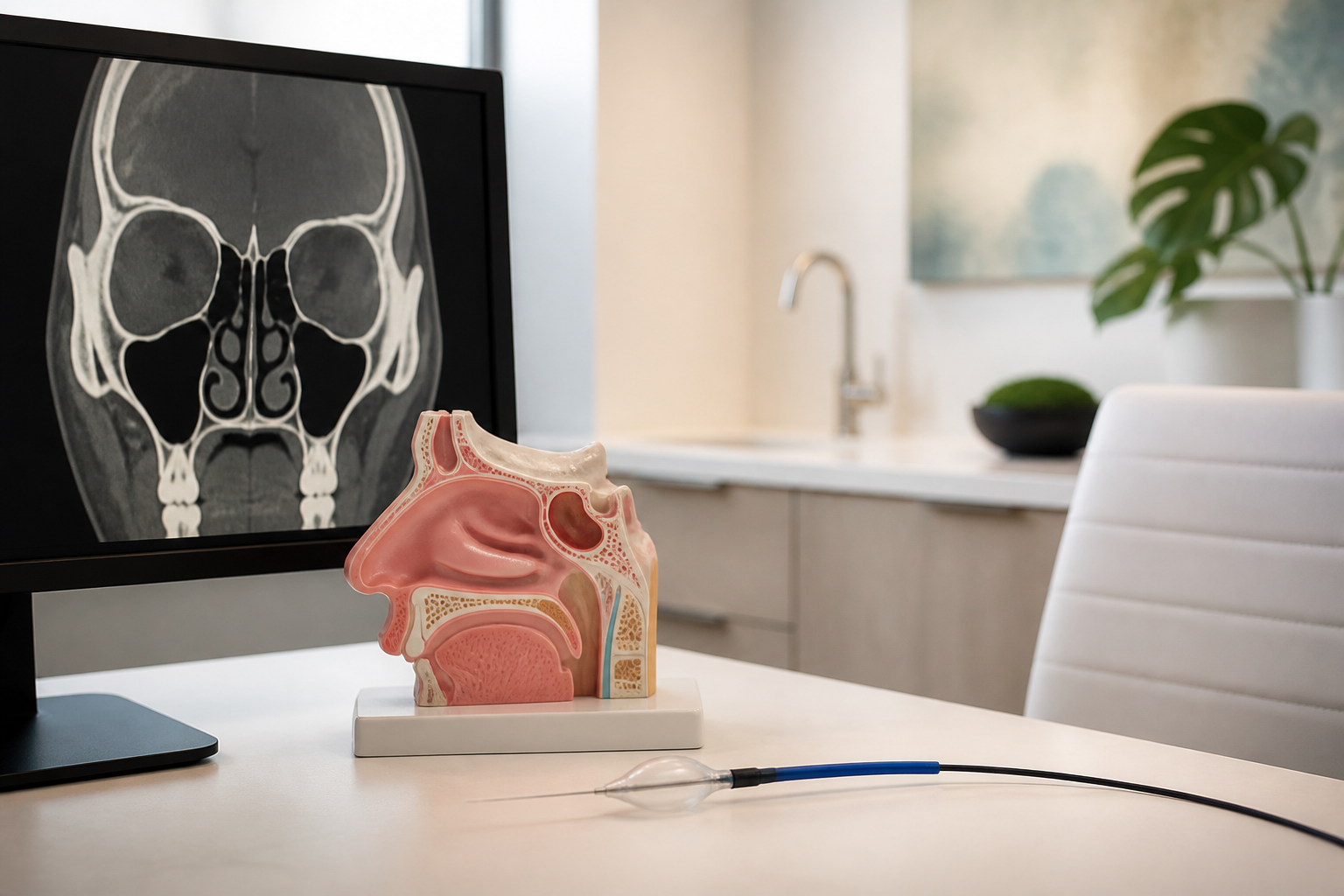
Balloon sinuplasty is a minimally invasive sinus procedure designed to open blocked sinus passages and restore normal drainage. Unlike traditional sinus surgery, it does not involve cutting or removing tissue. Instead, a thin, flexible catheter with a small balloon at its tip is guided into the blocked sinus opening. Once in position, the balloon is gently inflated, widening the passage and restructuring the sinus walls. The balloon is then deflated and removed, leaving a permanently enlarged opening behind.
The mechanics are straightforward, but the results can be significant. Blocked sinuses trap mucus, creating the warm, dark environment where bacteria thrive. When drainage is restored, the cycle of infection, inflammation, and medication dependency has a real chance of breaking.
Originally developed in the early 2000s and FDA-cleared since 2005, the procedure has an extensive clinical track record. Studies published in peer-reviewed ENT journals consistently report high patient satisfaction rates and durable symptom improvement, with many patients experiencing relief that holds for years after a single treatment.
Are You a Candidate? Understanding Who Qualifies
Not every patient with sinus problems is an ideal candidate for balloon sinuplasty, and a thorough evaluation is the only way to know for certain. Patients who tend to benefit most share a few common characteristics.
You have a confirmed diagnosis of chronic sinusitis. This typically means symptoms lasting 12 weeks or longer, supported by findings on a CT scan showing sinus blockage or inflammation.
You have tried conservative treatments without sufficient relief. Most physicians, including the specialists at LA Sinus and Snoring, recommend exhausting first-line options before considering any procedure. These typically include nasal steroid sprays, saline irrigation, oral antibiotics, and allergy management if relevant.
Your anatomy is suitable for balloon dilation. Balloon sinuplasty works best when the problem is obstruction at the sinus drainage opening rather than significant anatomical variation, large polyps, or a badly deviated septum that is independently blocking airflow. A CT scan and in-office examination help determine this.
You prefer to avoid general anesthesia. This is one of the most common reasons Beverly Hills, CA patients choose balloon sinuplasty over traditional functional endoscopic sinus surgery (FESS). The procedure can be performed safely in the office with local anesthesia.
If your anatomy includes extensive polyps or a severely deviated septum, your ENT may discuss hybrid approaches that combine balloon dilation with other minimally invasive techniques, or may recommend FESS as a more complete solution. An honest evaluation is far more valuable than a one-size-fits-all recommendation.
Balloon Sinuplasty vs. Sinus Surgery: Understanding the Real Differences
The comparison that comes up most often in our Beverly Hills consultations is balloon sinuplasty vs sinus surgery, and the distinction matters because these are meaningfully different procedures with different applications.
Traditional functional endoscopic sinus surgery (FESS) is performed under general anesthesia in a hospital or surgical center. The surgeon uses a rigid endoscope and small instruments to remove tissue, bone, and polyps that are obstructing the sinuses. It is highly effective for complex anatomy, extensive polyps, and cases where structural issues require direct correction. Recovery typically involves several days of downtime, nasal packing in some cases, and a few weeks before most patients feel fully normal.
Balloon sinuplasty takes a reshaping rather than a removal approach. Because no tissue is cut and no bone is removed, bleeding is minimal, post-procedure discomfort is generally mild, and recovery is substantially faster. Most patients return to normal activities within 24 to 48 hours.
The trade-off is scope. Balloon sinuplasty is ideal for patients whose primary problem is blocked sinus ostia (the natural drainage openings) without extensive additional pathology. When the anatomy is more complex, FESS may still be the right choice, and a skilled ENT will tell you so honestly.
One concern patients often raise is whether balloon sinuplasty is as effective as surgery. For appropriate candidates, clinical studies show comparable outcomes in terms of symptom relief and reduced sinus infections. The key phrase is “appropriate candidates.” Matching the procedure to the patient is what determines whether the result is excellent or disappointing.
What Happens During the Procedure
Understanding what actually happens in the procedure room can significantly reduce pre-appointment anxiety. Here is a realistic walkthrough of a typical in-office balloon sinuplasty performed at LA Sinus and Snoring.
Before you begin: You will sit or recline in a procedure chair. The specialist will apply a topical anesthetic to the nasal passages and may use a small injection to numb the area more deeply. Most patients describe feeling pressure and some mild sensation rather than sharp pain. The numbing process takes a few minutes and is the part patients most commonly underestimate in terms of how much comfort it provides.
Guided navigation: Using a thin endoscope for visualization, the ENT guides the balloon catheter to the targeted sinus opening. In some practices, image guidance technology is used to confirm placement, improving precision.
Dilation: Once the catheter is correctly positioned, the balloon is inflated for a few seconds. Patients typically feel a sensation of pressure during this moment. The sinus walls gently reshape around the balloon.
Irrigation: After the balloon is removed, the surgeon may flush the sinus cavity with saline to clear out mucus and debris that has accumulated.
Multiple sinuses in one visit: If more than one sinus is blocked, the process is repeated for each targeted sinus during the same appointment. The entire procedure typically takes between 30 and 60 minutes depending on how many sinuses are involved.
There is no hospital stay. Most patients drive themselves home or arrange a ride as a precaution, and many feel well enough to have a light meal and rest comfortably that same afternoon.
Recovery: What the First Days and Weeks Actually Look Like
Recovery from a minimally invasive sinus procedure is one of the most common concerns we hear from patients visiting us from across Los Angeles. The honest answer is that balloon sinuplasty recovery is genuinely mild for most people, but it is not symptom-free.
Days 1 to 2: Expect some nasal congestion, mild pressure, and light drainage. This is a normal inflammatory response as the sinuses settle after the procedure. Over-the-counter pain relievers such as acetaminophen are usually sufficient. Most patients rest at home during this window and return to desk work and light daily activities without difficulty.
Days 3 to 5: Congestion gradually begins to lift. Nasal saline rinses, which your provider will recommend starting within the first day or two, play an important role in keeping the passages clear and supporting healing. Strenuous physical activity, heavy lifting, and intense exercise are generally discouraged during this period.
Week 2 and beyond: Most patients notice meaningful improvement in breathing and sinus symptoms within the first two weeks. Full results often continue to develop over the following weeks as inflammation resolves and the sinuses reach their new normal drainage patterns. Follow-up appointments allow your ENT to check healing progress and address any questions.
A small number of patients experience temporary worsening of congestion in the first few days as tissue responds to the procedure. If symptoms seem severe or something feels wrong, your care team at LA Sinus and Snoring is accessible and will advise you.
Questions to Ask at Your Consultation
Coming to your consultation prepared helps you get the most from the appointment. Here are the questions Beverly Hills, CA patients find most useful to bring.
- Is my anatomy suitable for balloon sinuplasty alone, or might I need a combination approach?
- Which sinuses are blocked, and which will be treated?
- How many sinuses do you expect to address in one session?
- What should I do in the days before the procedure to prepare?
- Are there medications I should pause beforehand, such as blood thinners or anti-inflammatories?
- What does post-procedure follow-up look like, and how many visits should I expect?
- What outcomes are realistic for my specific situation?
A good specialist will not only answer these questions directly but will also proactively explain anything you have not thought to ask. If a consultation feels rushed or vague, seek a second opinion. Informed patients make better decisions and tend to have better outcomes.
Taking the Next Step Toward Clear, Comfortable Breathing
Chronic sinusitis does not have to be a permanent feature of your life. If you have cycled through repeated courses of antibiotics, lived with facial pain that worsens with every cold, and wondered whether there is a path forward that does not involve a hospital operating room, balloon sinuplasty may be exactly what you have been looking for.
The team at LA Sinus and Snoring in Beverly Hills, CA specializes in advanced, minimally invasive sinus care for patients throughout the greater Los Angeles area. We take the time to evaluate your anatomy carefully, explain your options honestly, and build a treatment plan around your specific situation and goals.
Contact LA Sinus and Snoring today to schedule your consultation and find out whether balloon sinuplasty is the right solution for your chronic sinus symptoms. Relief may be closer, and simpler, than you think.